Diabetes Recipes: Vegetable Curry (Vegetarian)
Looking for delicious diabetes recipes? Try this vegetable curry dish that balances flavor with health for people living with diabetes.
26 April 2021
For health professionals

Looking for delicious diabetes recipes? Try this vegetable curry dish that balances flavor with health for people living with diabetes.
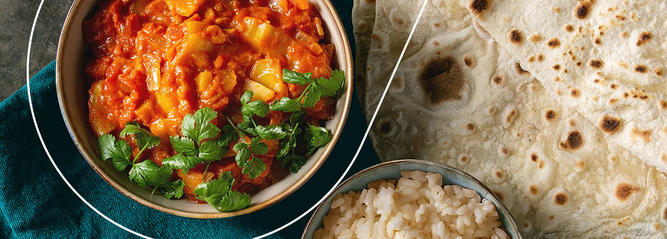
Finding recipes for meals that are both healthy and flavorful can be challenging for people living with diabetes. There’s a common belief that the healthiest meals are bland and flavorless. But this delicious Indian vegetable curry recipe will change your mind.
Whether you're a longtime vegetarian or looking for ways to get more vegetables into your meal plan, this wholesome recipe for meat-free vegetarian curry perfectly balances flavor and nutrition.
A meal that’s full of vegetables like pumpkin, cauliflower, chickpeas, and potatoes contains a good amount of fiber, so it can help you to stay full and feel satisfied for hours.1 This is especially important when it comes to meals for people with diabetes because consuming fiber can improve blood sugar control and contribute to other positive factors related to heart health, including cholesterol levels and body weight.
Along with fiber and other nutrients, you’ll get tons of flavor from ingredients like onion, garlic and red pepper.
While this vegetarian recipe is very filling when eaten on its own, vegetable curry is traditionally served with basmati rice (white rice). For a more blood sugar-friendly option, opt for brown rice instead. It has more fiber, while white rice has a higher glycemic index and glycemic load, which means it raises blood sugar levels after a meal.2,3 Brown rice, on the other hand, is a medium- to low-glycemic food that releases energy slowly, so you don’t need to worry about a spike in your blood sugar levels.
For the best flavor, it’s helpful to use fresh spices in this dish. Before you start cooking, check to see how old your ground spices are, and if they happen to be more than a couple of years old, consider replacing them.
| Calories | 180 |
|---|---|
| Protein | 8 g |
| Fat | 4 g |
| Carbohydrates | 25 g |
| Fiber | 7 g |
| Cholesterol | 3 mg |
| Sodium | 281 mg |
This vegetable curry recipe can be made up to 3 days in advance and served hot or cold like a “salad,” making it the perfect lunch or dinner, whether you’re at home or on the go.
Disclaimer: This content is not intended to be a substitute for medical advice. Any dietary changes should be discussed with a physician or a dietician.
Need more recipes? Check out our Butternut Squash and Arugula Lasagna Recipe!
The recipe and photo are taken from the low GI, low-fat recipe book by registered dietitians Gabi Steenkamp and Liesbet Delport, Eating for Sustained Energy 1.4
Mao T, Huang F, Zhu X, Wei D, Chen L. Effects of dietary fiber on glycemic control and insulin sensitivity in patients with type 2 diabetes: A systematic review and meta-analysis. J Funct Foods. 2021;82:104500. doi:10.1016/j.jff.2021.104500
Abdul Rahim AF, Norhayati MN, Zainudin AM. The effect of a brown-rice diets on glycemic control and metabolic parameters in prediabetes and type 2 diabetes mellitus: a meta-analysis of randomized controlled trials and controlled clinical trials. PeerJ. 2021;9:e11291. doi:10.7717/peerj.11291
van Dam RM. A Global Perspective on White Rice Consumption and Risk of Type 2 Diabetes. Diabetes Care. 2020;43(11):2625-2627. doi:10.2337/dci20-0042
Delport L, Steenkamp G. Eating for Sustained Energy 1. Kwela Books; 2010. https://books.google.hu/books?id=xRloPwAACAAJ
Accu-Chek Newsletter
Get diabetes management tips and news delivered right to your inbox.